
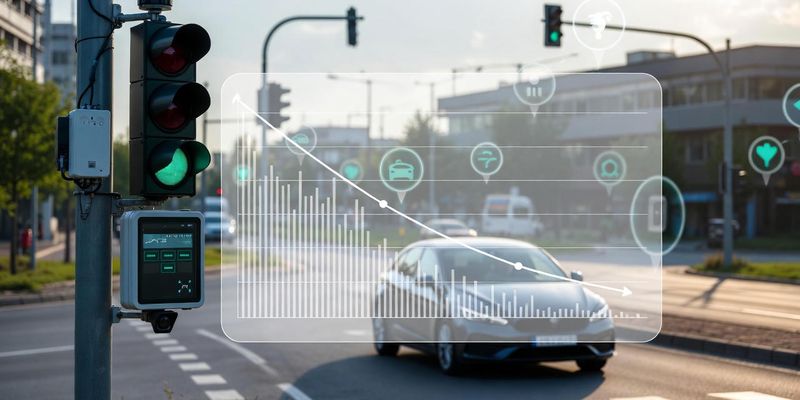
How Much Can Adaptive Traffic Signal Control Improve Intersection Performance?
A Comprehensive, Data-Driven Analysis with TTS Maestro
Why Measurable Performance Matters in Modern Traffic Management
For municipalities and traffic authorities, the most critical question regarding traffic signal systems is simple:
“What exactly does this system improve — and by how much?”
Theoretical promises, simulations, or laboratory tests alone are no longer sufficient.
Real decisions require measured, field-validated performance data.
This article examines the real-world impact of TTS Maestro Traffic Signal Controllers, combined with camera-based dynamic intersection management, using data from two independent field performance analysis reports.
The focus is on measurable improvements in:
Average vehicle delay
Intersection efficiency
Peak-hour traffic performance
All conclusions are drawn from on-site measurements under real traffic conditions.
The Limitations of Traditional Fixed-Time Signal Control
For decades, many cities relied on:
Predefined signal timing plans
Fixed cycle lengths based on time-of-day
Limited responsiveness to real-time traffic demand
While reliable, this approach has clear limitations:
Traffic demand is dynamic; signal timing is static
Unnecessary waiting during low demand
Long queues during peak hours
Inefficient use of intersection capacity
Even legacy adaptive systems often rely on plan switching, not true real-time optimization.

What Changes with TTS Maestro–Based Dynamic Intersection Control?
Unlike fixed-time systems, TTS Maestro operates on real-time traffic conditions rather than predefined assumptions.
The system uses:
Cameras
Image-processing-based vehicle detection
Real-time occupancy and queue length analysis
Decisions are made continuously based on actual traffic presence, not scheduled expectations.
The result is a fundamental shift:
From “following a plan” to responding to real traffic conditions.
How Performance Was Measured (Methodology Overview)
Both studies evaluated performance using the same key metric:
Average Delay per Vehicle
This represents the average waiting time from arrival at the intersection until departure.
Measurements were taken under identical conditions:
Same intersections
Same weekdays (Monday, Wednesday, Sunday)
Same time periods:
07:00–09:00
12:00–14:00
17:00–19:00
Each scenario compared:
Fixed-time control vs. dynamic control
Field Results from Elazığ & Bulak Rantai: What the Numbers Show
Reduction in Average Vehicle Delay
Measured reductions after deploying dynamic control:
Monday: 18.2% – 23.3%
Wednesday: 17.4% – 28.1%
Sunday: 19.3% – 31.8%
📌 The highest improvement — 31.8% reduction — was recorded during Sunday morning peak hours.
Importantly, these improvements were observed across entire intersections, not isolated movements.
What Does a 20–30% Delay Reduction Mean in Practice?
In real-world terms, these reductions translate into:
Shorter vehicle queues
Less stop-and-go driving
Lower fuel consumption
Reduced emissions
More predictable travel times
The impact is especially significant in:
Dense urban areas
Peak-hour congestion
Intersections with fluctuating demand
Why Dynamic Control Delivers Better Performance
1. Decisions Based on Reality, Not Assumptions
Fixed-time systems rely on historical estimates.
Dynamic systems respond to what is actually happening now.
TTS Maestro continuously evaluates:
Is there a vehicle present?
Is the queue growing?
Which approach needs priority?
2. Flexible Phase and Cycle Management
Instead of rigid cycles, the system enables:
Dynamic green time adjustment
Real-time cycle extension or reduction
Elimination of unnecessary red phases
3. Holistic Intersection Management
Rather than optimizing one approach at the expense of others, the system:
Evaluates all approaches simultaneously
Balances competing demands
Prevents localized improvements from creating downstream problems
Strategic Benefits for Municipalities and Traffic Management Authorities
Beyond technical performance, the results indicate broader strategic value:
Higher efficiency from existing infrastructure
Deferred need for costly physical expansion
Reduced traffic complaints
Transparent, measurable performance reporting
For long-term traffic master planning, such systems significantly improve return on investment.
Scalable and Sustainable Traffic Control
A key finding from both studies:
Performance gains were consistent across different days and traffic volumes.
This demonstrates adaptability to:
Seasonal demand changes
Traffic growth
Urban expansion
Conclusion: Data-Driven Adaptive Traffic Control Works
The Elazığ and Bulak Rantai field studies clearly demonstrate that:
Dynamic intersection control is not theoretical
It delivers measurable, real-world benefits
Average vehicle delay can be reduced significantly
TTS Maestro stands at the center of this transformation, offering municipalities a scalable, field-proven traffic signal platform designed for long-term urban mobility.