
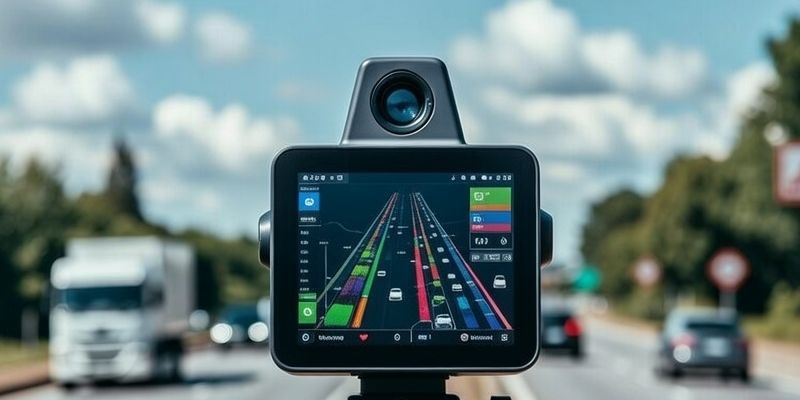
Radar, Cameras, Magnetic Sensors, and Loop Detectors
Everything You Need to Control a Traffic Intersection
Modern traffic intersections are no longer controlled by simple timers and predefined signal plans.
Today, effective intersection control depends on accurate detection, continuous monitoring, and intelligent decision-making, all of which rely on a combination of sensing and perception technologies.
From radar units and video cameras to magnetic sensors and inductive loop detectors, each technology plays a distinct role in understanding traffic behavior and enabling smart traffic management.
This comprehensive guide explains all essential technologies required to monitor, detect, and control a traffic intersection, their advantages and limitations, and how they collectively support smart cities and intelligent traffic management systems.
Why Traffic Detection Is the Foundation of Intersection Control
A traffic signal controller can only make correct decisions if it receives accurate and timely information.
Without reliable detection:
Green times cannot be optimized
Congestion cannot be identified
Priority strategies fail
Safety risks increase
At a fundamental level, every traffic management strategy begins with detection.
You cannot manage what you cannot measure—and traffic is no exception.
Core Technologies Used to Monitor and Control Traffic Intersections
A modern traffic intersection typically relies on a combination of the following technologies:
Radar-based vehicle detection
Video cameras and image processing
Magnetic sensors
Inductive loop detectors
Each technology has unique strengths and weaknesses, and no single solution fits all environments.
Radar-Based Traffic Detection Systems
What Is Radar?
Traffic radar systems use radio waves to detect vehicles by measuring reflected signals.
They determine vehicle presence, speed, distance, and sometimes direction.
Radar detectors are commonly mounted:
On poles
On signal heads
Above lanes
They operate reliably in various weather and lighting conditions.
Why Radar Is Important in Traffic Management
Radar provides non-intrusive detection, meaning:
No road cutting
No lane closures during installation
Minimal maintenance disruption
Radar is especially valuable for:
Speed detection
Queue measurement
Multi-lane monitoring
Advantages of Radar Detection
Works in rain, fog, and low light
Non-intrusive installation
Long detection range
High durability
Limitations of Radar Detection
Higher initial cost compared to loops
Limited object classification (vehicle type)
Potential interference in complex urban geometries
Video Cameras in Traffic Intersection Control
What Are Traffic Cameras?
Traffic cameras capture visual data from intersections and road segments.
Using image processing and computer vision algorithms, cameras can extract traffic information such as:
Vehicle presence
Lane occupancy
Queue length
Turning movements
Pedestrian and cyclist detection
The Role of Cameras in Modern Traffic Systems
Cameras offer situational awareness beyond simple detection.
They allow operators to:
Visually verify incidents
Monitor abnormal conditions
Support enforcement and analytics
In smart cities, cameras often serve multiple purposes beyond signal control.
Advantages of Camera-Based Detection
Rich data extraction
Multi-modal detection (vehicles, pedestrians, cyclists)
Visual verification
Flexible detection zones
Limitations of Camera-Based Detection
Performance affected by poor lighting or glare
Weather sensitivity (heavy rain, snow)
Requires calibration and maintenance
Privacy and data protection considerations
Magnetic Sensors for Traffic Detection
What Is a Magnetic Sensor?
Magnetic sensors detect changes in the Earth’s magnetic field caused by metallic objects such as vehicles.
They are typically:
Embedded in the pavement
Installed with minimal surface disruption
Why Magnetic Sensors Are Used
Magnetic sensors provide a compact and low-power detection solution.
They are commonly used in:
Low to medium traffic environments
Temporary installations
Wireless sensor networks
Advantages of Magnetic Sensors
Small footprint
Low power consumption
Wireless options available
Resistant to weather conditions
Limitations of Magnetic Sensors
Limited detection zone
Less effective for non-metal vehicles
Battery replacement required (for wireless models)
Inductive Loop Detectors
What Is a Loop Detector?
Loop detectors consist of wire loops embedded in the roadway.
When a vehicle passes over the loop, it changes the inductance of the circuit, indicating vehicle presence.
This technology has been used for decades and remains widespread.
Why Loop Detectors Are Still Relevant
Despite newer technologies, loop detectors remain popular because:
They are cost-effective
They offer reliable vehicle detection
They are well-understood by traffic engineers
Advantages of Loop Detectors
High detection accuracy
Mature and proven technology
Relatively low equipment cost
Limitations of Loop Detectors
Intrusive installation
Pavement cutting and lane closures required
Vulnerable to road degradation
Higher maintenance over time
Comparing Detection Technologies
| Technology | Installation | Accuracy | Weather Resistance | Maintenance |
|---|---|---|---|---|
| Radar | Non-intrusive | High | Excellent | Low |
| Camera | Non-intrusive | High (conditions apply) | Moderate | Medium |
| Magnetic Sensor | Semi-intrusive | Medium | High | Medium |
| Loop Detector | Intrusive | High | High | High |
The most effective intersections use a hybrid detection strategy rather than relying on a single technology.
How These Technologies Work Together at an Intersection
Modern intersections integrate multiple detection sources to:
Increase reliability
Cross-validate data
Support adaptive control
For example:
Radar measures speed and queue length
Cameras confirm turning movements
Loops provide redundancy for presence detection
This layered approach improves both operational performance and fault tolerance.
Role of Detection Technologies in Adaptive Traffic Signal Control
Adaptive traffic signal control systems depend heavily on accurate detection.
They use sensor data to:
Adjust green times
Modify cycle lengths
Optimize phase sequences
Consistent performance improvements are achieved not just at peak hours, but across different days and varying traffic demand levels.
Traffic Detection and Smart Cities
In smart city ecosystems, traffic detection technologies support more than signal control.
They enable:
Real-time traffic monitoring
Incident detection
Data-driven urban planning
Integration with public transport and emergency systems
Traffic data becomes a strategic urban asset.
Data Quality: The Hidden Factor in Traffic Management
The effectiveness of any traffic system depends on:
Sensor accuracy
Proper calibration
Ongoing maintenance
Poor data quality leads to:
Inefficient signal timing
Increased congestion
Loss of public trust
Cybersecurity and System Integrity
As detection systems become connected, cybersecurity becomes critical.
Key considerations include:
Secure communication protocols
Access control
Data integrity
A compromised detection system can disrupt city-wide traffic operations.
Selecting the Right Detection Strategy
When choosing detection technologies, cities must consider:
Traffic volume and composition
Road geometry
Climate conditions
Budget constraints
Maintenance capabilities
There is no universal solution—context matters.
Future Trends in Traffic Detection
AI-Powered Video Analytics
Improved object classification and prediction.
Sensor Fusion
Combining radar, camera, and magnetic data.
Connected Vehicles
Vehicle-to-infrastructure detection.
From Detection to Intelligence
Detection technologies are not the final goal; they are the foundation of intelligent traffic management.
When integrated with:
Adaptive controllers
Central traffic management platforms
Analytics and decision-support tools
They enable cities to move from reactive control to proactive traffic intelligence.
Conclusion: Building the Smart Intersection
A truly smart intersection requires:
Reliable detection
Redundant technologies
Intelligent control
Long-term operational planning
Radar, cameras, magnetic sensors, and loop detectors are not competitors—they are complementary tools.